
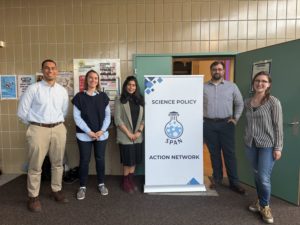
As artificial intelligence reshapes economies, public institutions, and global governance, the conversation can no longer focus solely on how AI should be regulated. An equally important question is who will shape those policies in the years ahead. The answer extends beyond governments and industry leaders to include the scientists, researchers, and technical experts developing the technologies themselves.
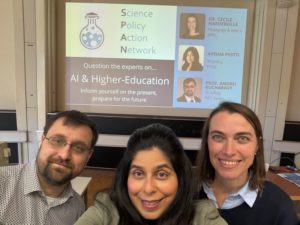
This theme took centre stage during a recent discussion at EPFL, where Ayisha Piotti, joined fellow experts to engage with students and early-career researchers on AI policy, higher education, and the transformation of teaching and learning in the age of AI. The exchange underscored a growing consensus: preparing for the AI transition requires stronger connections between technical expertise and policymaking.
Drawing on RegHorizon's commitment to responsible AI governance, Ayisha Piotti highlighted the importance of creating pathways for scientists and researchers to contribute meaningfully to policy development.
Rethinking Higher Education for the AI Era
The discussion reinforced the evolving role of higher education. Preparing students for an AI-enabled future is no longer limited to developing technical proficiency. Universities increasingly have a responsibility to equip future leaders with an understanding of governance, ethics, public policy, and the societal implications of emerging technologies.
This interdisciplinary approach is essential for building a workforce capable of navigating not only technological complexity but also the regulatory and institutional challenges that accompany AI adoption across sectors.
Empowering the Next Generation of AI Leaders
One of the strongest takeaways from the exchange was the enthusiasm of young researchers to engage beyond their academic disciplines. Their interest in contributing to public policy reflects a broader shift in how the next generation views its role not only as innovators, but also as active participants in shaping the frameworks that will govern technological progress.
For us, fostering these conversations is central to building more effective and inclusive AI governance. Empowering young technical talent to engage with policymakers today strengthens the quality of the decisions that will shape tomorrow's AI ecosystem.
As AI continues to transform society, governance will be most effective when it draws on expertise from across generations and disciplines. Investing in young scientists and researchers as contributors to policy is not simply an educational priority; it is a governance imperative.