
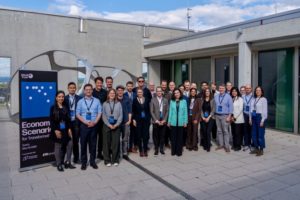
Debates about AI and the economy tend to swing between two comfortable extremes: the promise that innovation will lift everyone, and the fear that automation will displace everyone. The truth is less comfortable than either, and preparing for it requires the kind of careful, scenario-based work that rarely makes headlines.

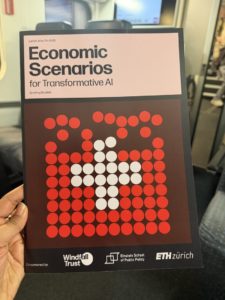
That work was the focus of an invite-only expert workshop in Zurich, co-organized by the Windfall Trust, the ETH Albert Einstein School of Public Policy, and the ETH Center for Law & Economics, in which Ayisha Piotti, took part. Framing presentations by Daniel Naeff of the ETH AI Center on AI capabilities and trajectories, Michael Siegenthaler of ETH Zürich on early signals from the Swiss labour market, and Danny Buerkli of the Windfall Trust on the stakes of the transition set the scene for a day of collaborative working sessions stress-testing what AI implies for Swiss talent pipelines, government revenues, and social cohesion.
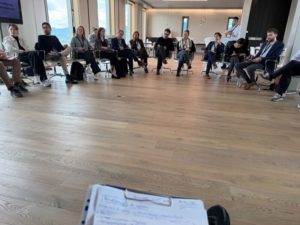
The heart of the day was the rich group discussions among a carefully curated, invite-only list of experts from across Switzerland. The concept of collaborative working sessions allowed us to stress-test ideas. Some of the key takeaways of Ayisha from this event are as follows:
The Pie Dilemma
While innovation may grow the economy, the internal distribution is shifting. The need of the hour is that we must plan for the “Winners and Losers” resulting from task substitution.
The Multi-Scenario Future:
The sessions explored various potential trajectories, acknowledging that the impact on wages, consumption patterns, and social security expenditure is not straightforward.
Proactive Preparation:
The session reached a clear consensus that we must develop solutions now based on multiple potential scenarios, rather than waiting for a single reality to unfold.
In conclusion, the impact of AI on wages, consumption patterns, and social security expenditure is not a single trajectory to be forecast; it is a range of plausible futures, several of which point in different directions. The consensus in the room was clear: the responsible response is not to wait for one reality to unfold and then react, but to develop policy options now against multiple scenarios so that whichever future arrives.