

Ayisha Piotti, participated in the recent workshop at the Technical University of Munich on "Co-Designing Innovation-Enabling Pathways for AI and Data Governance," joining cross-functional leaders from business, academia, and government.
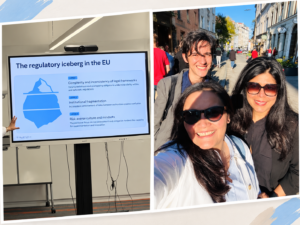
The engagement reinforced a conviction at the heart of her work: the most effective policy solutions are co-created. And the frameworks debated in Munich are not just relevant for Europe - they as such offer a blueprint for regulatory coherence globally.
Five strategic takeaways stood out during the event:
- Evidence before design. Law-making must begin early with rigorous needs analysis and problem identification i.e. principle-based, not reactive.
- Dialogue is infrastructure. Structured, regular exchange between regulators and the innovation ecosystem is no longer optional. It is a load-bearing pillar of modern governance.
- Coherence over fragmentation. A "single point of guidance" is urgently needed - above all to empower SMEs to scale across borders without drowning in overlapping regimes.
- Measure innovation impact. Policy should enable progress, not merely mitigate risk. We need frameworks where the effect on innovation is quantifiably understood.
- Experiment meaningfully. Regulatory sandboxes and pilots must be designed around genuine learning outcomes and iterative growth - not compliance optics.
The common thread is that AI governance is shifting from a rule-writing exercise to a systems-design discipline. Ayisha expressed her heartfelt gratitude to the organizers and the Open Loop (Meta) and DataSphere teams for fostering a high-caliber environment for exchange, and to the brilliant colleagues who made a productive day in Munich a memorable one.